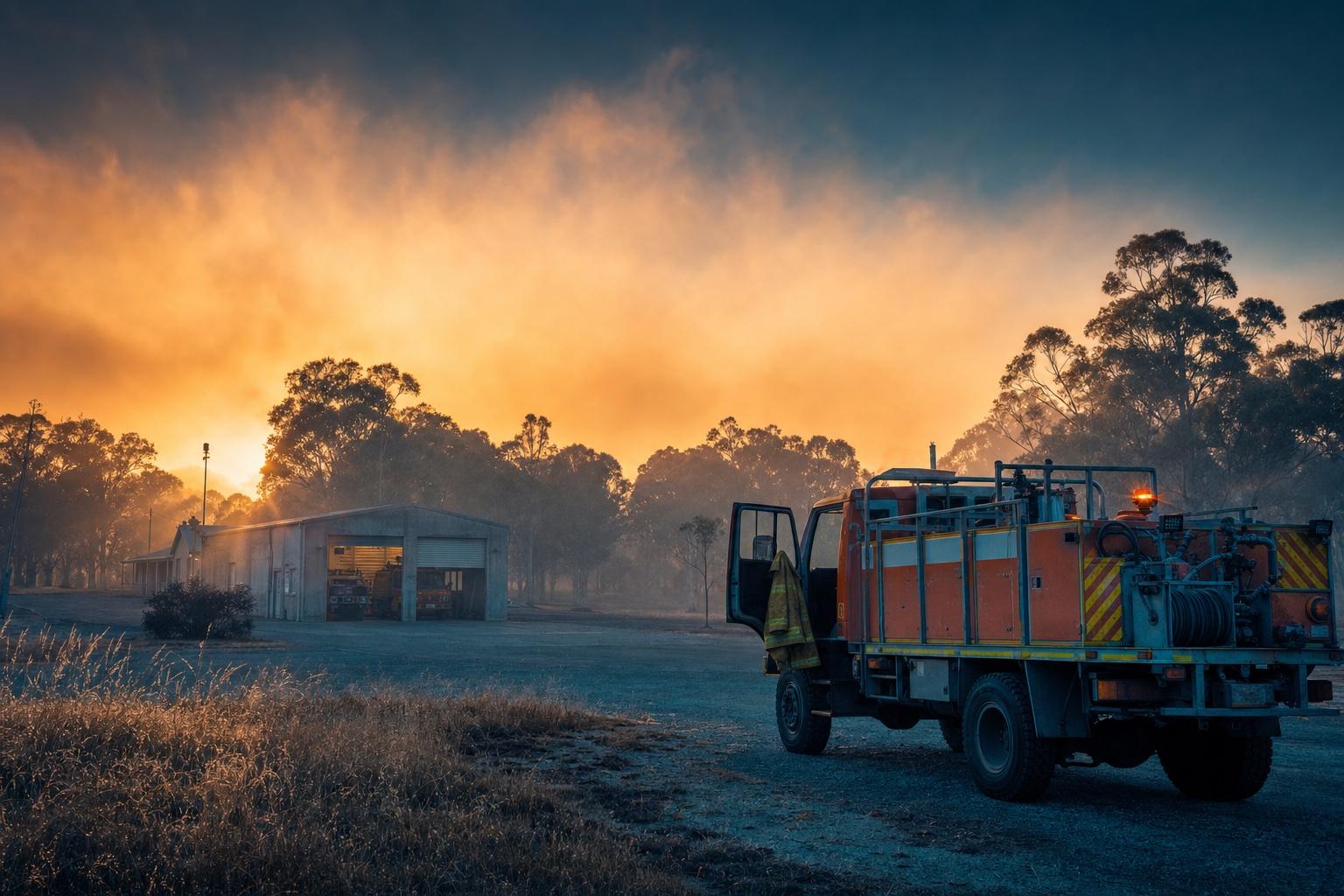
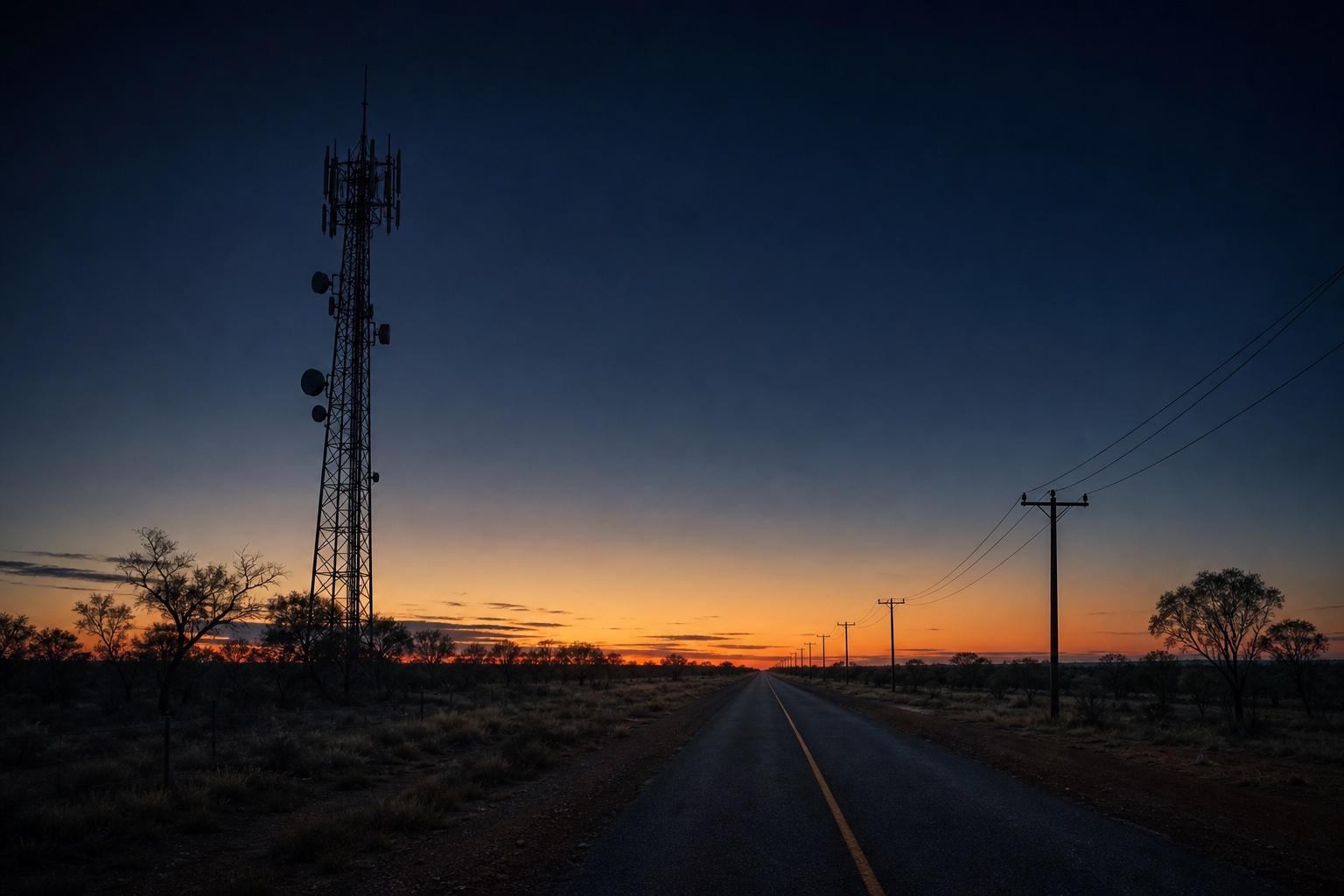
At 00:17 Australian Eastern Standard Time on Thursday, 18 September 2025, an Optus engineering team pushed a firewall change as part of a routine network upgrade. By 14:34 the same day — fourteen hours and seventeen minutes later — Optus had restored service. In the gap, 455 unique service numbers attempting to dial Triple Zero failed to connect. The outage was geographically concentrated in South Australia, Western Australia, the Northern Territory, and far-western New South Wales: vast remote stretches where the next nearest mobile tower may be 150 kilometres away.
The independent review commissioned by Optus and released on 18 December 2025, led by experienced public-service executive Kerry Schott, concluded that the outage and its mishandling were linked to at least two deaths.[1] The Senate Environment and Communications References Committee inquiry into the outage and the broader Triple Zero system was still finalising findings as of the time of writing.[2]
This wasn't the first time
Twenty-two months earlier, at 04:05 Australian Eastern Daylight Time on Wednesday 8 November 2023, the same telco — Optus — suffered a different but functionally identical outage. The technical cause was different: a Border Gateway Protocol event triggered by an upgrade at a Singtel internet exchange in North America cascaded into an automated shutdown of the Optus network in Australia. The consequence was the same: roughly 12 to 13 hours of total darkness across all Optus internet, mobile, and fixed-line services.[3]
Ten million customers and 400,000 businesses lost connectivity. Optus initially advised the Senate that 229 calls to Triple Zero from Optus customers had not been able to connect. In January 2024 Optus corrected this figure: the actual count was at least 2,697.[4] The Australian Communications and Media Authority's separately-conducted investigation found that 2,145 emergency calls had failed.[5]
Metro Trains Melbourne shut down for an hour while drivers attempted to reach the control centre without a working radio bridge. Ramsay Health Care's seventy hospitals and clinics had phone outages. The Royal Adelaide Hospital was compromised; Broken Hill Base Hospital lost its referral pathway. Commonwealth Bank, ANZ, and Westpac call centres went down; roughly half of payment terminals on the Optus network could not switch to an alternative provider, and small businesses across the country shuttered for the day or absorbed the cost of un-takeable transactions. The Optus CEO resigned. The stock loss was reported at A$2 billion.[6]
Twenty-two months later, here we are again.
The field-work angle nobody covers
The 2023 outage broke EFTPOS terminals and Melbourne trains, and that's what got the headlines. There's a quieter casualty that didn't show up in the coverage: distributed field operations.
Picture a construction supervisor running a 30-site project across regional Queensland. A FIFO mining crew flying into a remote camp in the Pilbara. An aged-care home-visit nurse driving the regional Hunter Valley loop. A logistics dispatcher tracking a refrigerated convoy on a 12-hour cross-state drive. A lone fisheries inspector heading into Kakadu. A regional bushfire suppression crew working a vehicle staging area outside ASTRA HF coverage.
For these operators, the work is the journey. And in most journey-management software in production today, the journey is the network connection. No connection means no journey log. No journey log means no safety check-in. No check-in means no answer if something goes wrong.
When Optus went dark in 2023, the field-work problem evaporated from coverage. Trains and EFTPOS were easier stories. But fly-in fly-out crews ran "out of bounds" on most journey management dashboards until the network came back. Compliance check-ins that should have happened every 30 minutes simply stopped. Some operations centres didn't notice for hours.
The September 2025 outage was geographically concentrated in the most remote parts of Australia. The Senate inquiry submission from Optus confirms the cohort: South Australia, Western Australia, the Northern Territory, and far-west New South Wales.[7] Those are precisely the regions where distributed field work is most dependent on cellular connectivity and where journey-management failures have the longest consequence-of-failure window. If a worker's last check-in is at 23:50 and the network goes down at 00:17, that worker is invisible to the system until 14:34 the next afternoon — a roughly 14-hour gap during which nothing in the operational picture changes, even if conditions on the ground change dramatically.
What the right tools look like in 2026
Offline-first heartbeat. Multi-carrier failover via roaming SIM. Cached journey data with local store-and-forward. Queued sync when connectivity returns. Plain-text fallback to SMS or radio. None of these capabilities is new.
The 2023 ACMA investigation specifically called out the failure of Optus's roaming-failover arrangements: the capability existed to route emergency calls to Telstra when the Optus network failed, but it did not function correctly under outage conditions.[8] That isn't a story about a missing capability. It's a story about a present capability that wasn't tested under realistic load.
For distributed-workforce software, the same pattern holds. Offline-first as a feature has existed since the IBM Lotus Notes era of the early 1990s. Multi-SIM and roaming-failover hardware has been commercially available for decades. The technology is not the bottleneck.
This is a damning report of the culture within Optus, their contractor Nokia and the entire Triple Zero system. It is deeply concerning to see laid bare how many mistakes were made along the way and how Optus did not have the processes in place to manage such a failure.
The Schott review identified ten distinct preventable mistakes by Optus and its contractor Nokia in the September 2025 incident.[9] Each one was a known industry practice — proper change management, multi-stage staging, escalation procedures, failover validation — that the deployment did not follow. The Optus board has accepted all recommendations and flagged terminations of accountable individuals.
An honest scoping of what offline-first means
The story is that better tools existed and weren't being used
This is the editorial spine of everything we will publish in this series: the disaster wasn't the story. The story is that the prevention was available, was understood, and was not adopted.
For Australian distributed-workforce operators, the September 2025 outage is the question that the November 2023 outage already asked: when the network goes dark, what happens to your work?
If the answer is "we don't know until the network comes back" — there are tools, and they aren't expensive, and they aren't experimental, that change the answer. The architectural pattern — offline-first mobile, queued check-ins, manager-side reconciliation — has been understood for years. TetraSense is new to that category: we shipped our mobile app to the App Store in January 2026. The question for operators in 2026 isn't whether the pattern exists. It's whether you've adopted it.
Sources cited in this article:
- ABC News, "Optus flags possible terminations after report into Triple Zero failures released," 18 December 2025
- Parliament of Australia, "Triple Zero service outage" inquiry (Environment and Communications References Committee, referred 28 October 2025)
- Wikipedia, "2023 Optus outage" (consolidated reference)
- Senate Environment and Communications References Committee, "The Optus Network Outage," Chapter 2, 2024
- ACMA, "Investigation report — Optus outage 8 November 2023" (redacted version published November 2024)
- Senate inquiry findings, paragraphs 2.5 – 2.15 (banking, hospitals, transport impacts)
- Optus submission to the Senate Triple Zero inquiry, executive summary
- ACMA investigation report findings on roaming failover behaviour
- ABC News, Kerry Schott review coverage, 18 December 2025