At 02:09 PM Australian Eastern Standard Time on Friday, 19 July 2024, CrowdStrike pushed what it described as a routine "Rapid Response Content" configuration update to Windows endpoints running its Falcon endpoint-security sensor version 7.11 and above. Channel File 291, the update payload, contained a defect that an internal Content Validator failed to catch. When the file was loaded into the sensor's Content Interpreter, it triggered an out-of-bounds memory read. The exception couldn't be handled gracefully. Every affected Windows machine kernel-panicked into a Blue Screen of Death.[1]
Seventy-eight minutes later, at 03:27 PM AEST, the defect was reverted. But the fix only protected machines that had been offline during the 78-minute window or hadn't yet received the update. Machines that had already crashed remained crashed — in many cases requiring manual on-site intervention to delete Channel File 291 from each device before it could boot. Cybersecurity expert Troy Hunt later described what followed as "the largest IT outage in history".[2]
It wasn't, primarily, an IT story.
What 78 minutes did to Australian field operations
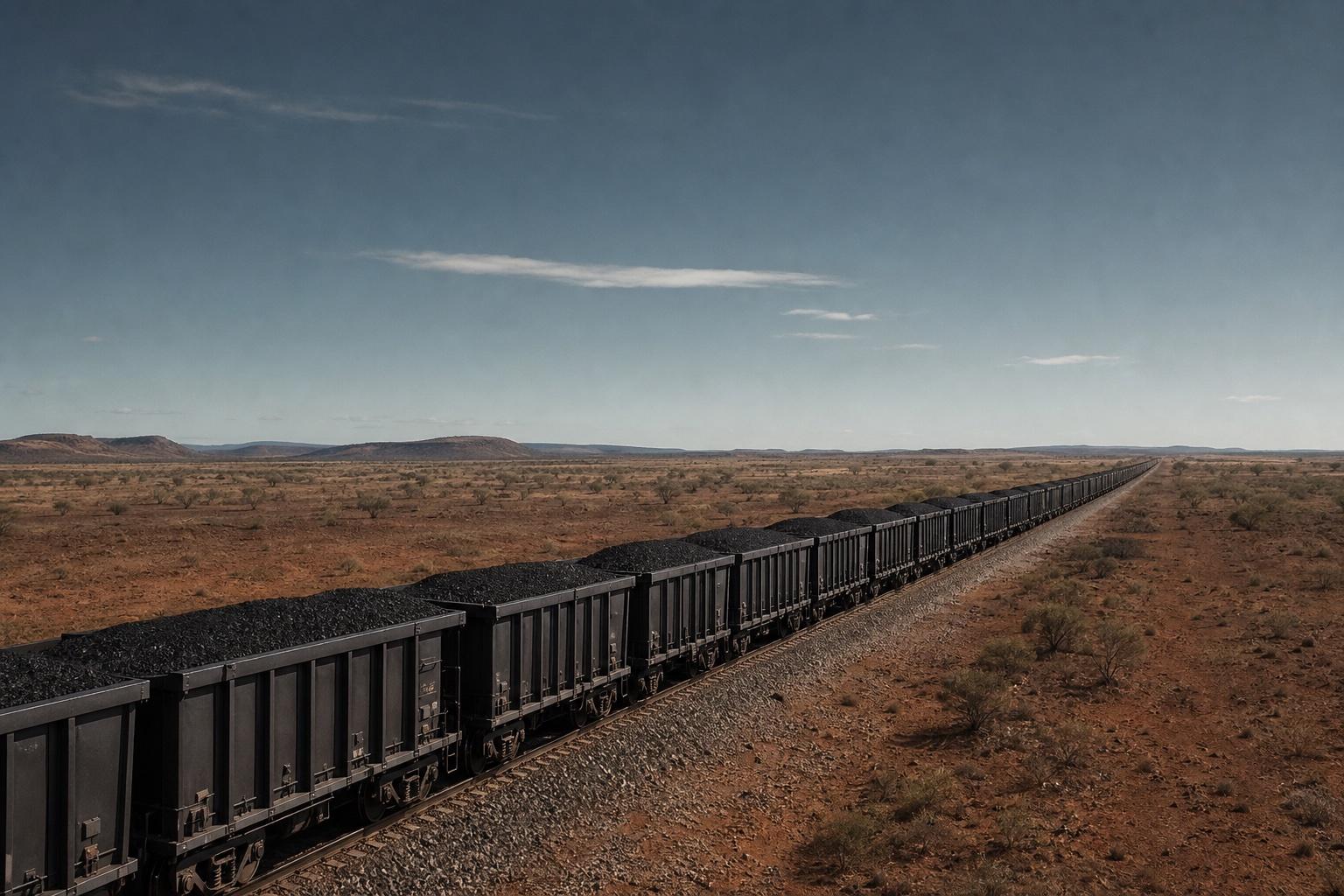
By 03:45 PM AEST, Aurizon — Australia's largest rail-freight operator — was reporting that "a number of its information technology systems are unavailable or have been taken offline." The consequence was direct: "All train services for all rail operators on the Central Queensland Coal Network have been stopped, pending recovery of IT systems."[3]
The Central Queensland Coal Network moves a substantial share of Australia's metallurgical coal exports through ports including Hay Point, Dalrymple Bay, and Gladstone. Every rail operator using that network — not just Aurizon — was stopped, because the orchestration layer they all depended on was running on Windows endpoints that had received Channel File 291.
Sydney Airport's flight-information displays went blank. Melbourne, Adelaide, and Brisbane airports reported check-in chaos. Qantas, Virgin Australia, and Jetstar were directly impacted — Jetstar cancelled all flights until 2 AM Saturday.[4] Coles and Woolworths confirmed in-store operations were affected. Telstra reported degradation. NAB, ANZ, and Bendigo Bank had services down. Black & White Cabs in Queensland couldn't receive bookings or dispatch drivers. The AFL's Essendon club warned fans heading to Docklands Stadium to bring physical tickets because their digital ticketing was offline.[5]
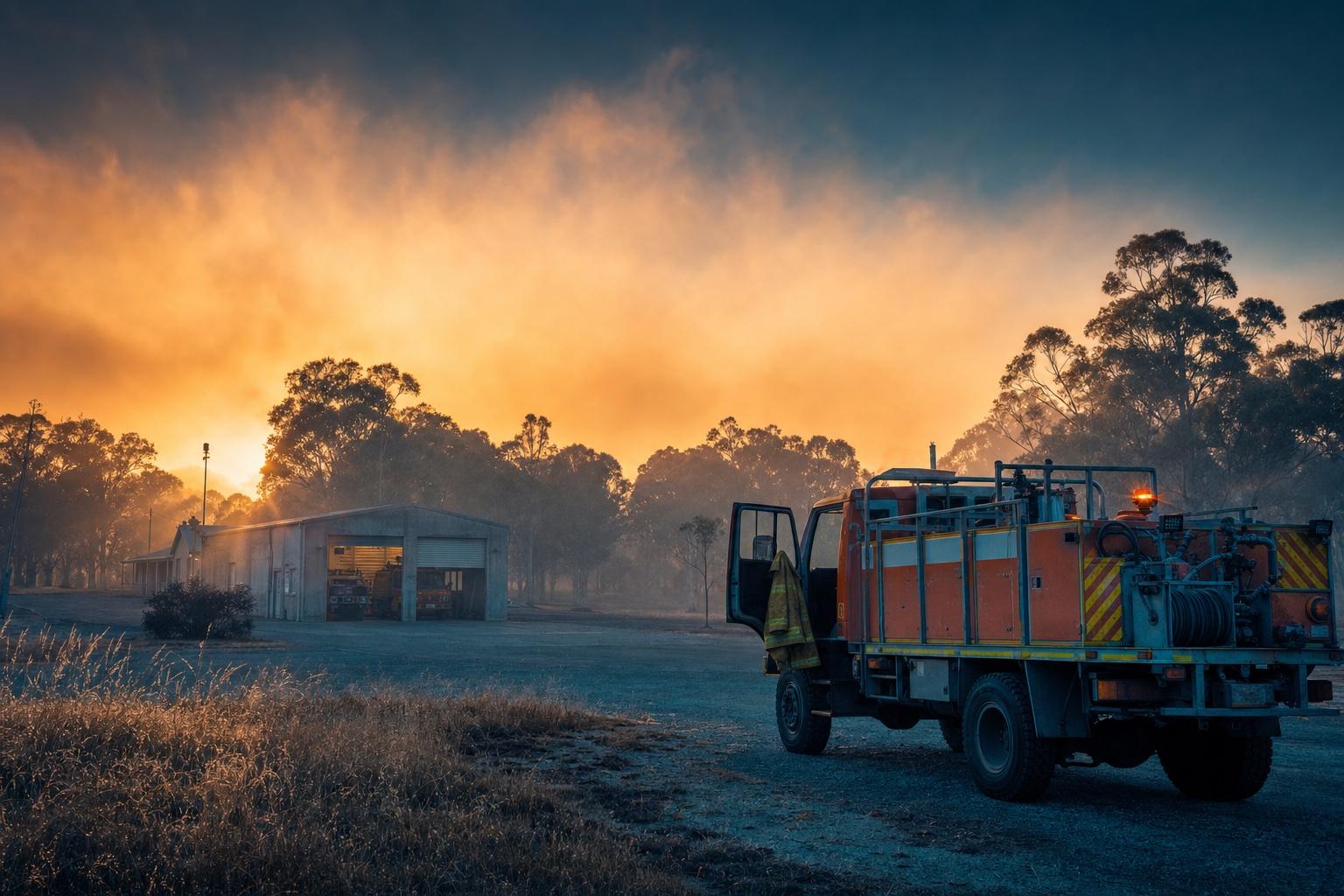
In Horsham, regional Victoria, the local service station closed because its point-of-sale and pump-control systems wouldn't boot.[6]
The architectural fact nobody quite said out loud
CrowdStrike's own preliminary Post Incident Report contains this sentence, in plain language: "Mac and Linux hosts were not impacted."[7]
That isn't a footnote. It's the entire story.
Organisations whose operational technology stack ran on macOS, Linux, iOS, or Android — or whose endpoint security was provided by anyone other than CrowdStrike Falcon on Windows — were untouched on 19 July 2024. The defect existed, it was global, it was deployed at scale, and it skipped them entirely. Not because they were lucky. Because their architecture didn't put a single kernel-mode driver from a single vendor in the critical path of their field operations.
The conversation after the outage focused, understandably, on CrowdStrike's quality-assurance processes. The harder question — the one regulators and operators are still uncomfortable with — is why so much Australian critical infrastructure (rail control, airport ground systems, retail point-of-sale, regional fuel distribution) was deployed in a way that made a single vendor's overnight configuration push capable of stopping it.
We need more IT technicians available to respond to these sorts of things, or to ensure these things don't happen, but unfortunately, we don't have many IT technicians available in regional areas.
The recovery from Channel File 291 wasn't a click. On many machines it required physical access to the device, boot into Safe Mode, manual deletion of the offending file, then reboot. In a major capital city this was a frustrating Friday afternoon. In Horsham, or at a remote signalling cabinet on the Central Queensland Coal Network, it was a multi-day journey for someone to drive out and fix it.
The field-work angle nobody covered
In the days after 19 July 2024, the coverage focused on airports, banks, and supermarkets. There's a quieter consequence that didn't get the same attention.
Field workers — drivers, technicians, engineers, inspectors, frontline crews — are increasingly mobile-first. They carry iOS or Android phones, run mobile-first software, and communicate via cellular networks. Most of them, individually, were never going to see Channel File 291.
But the back-office systems that orchestrate them — the dispatch consoles, the schedule planners, the journey-management dashboards, the compliance evidence stores, the supervisor terminals — many of those run on Windows servers behind the scenes. When Channel File 291 took out the orchestration tier, the workers themselves were fine. The coordination that made their work possible at scale was paralysed.
Aurizon didn't lose its trains. It lost the ability to coordinate them safely. The Queensland coal network didn't have a signal failure. It had a Windows endpoint failure that propagated up the control stack. The trains stopped because no organisation that takes safety seriously will run rail operations with no visibility into the coordination layer.
That's the field-operations lesson. When the technology that orchestrates distributed work fails, the work stops — even if the workers and their tools are perfectly fine.
An honest scoping of what cross-platform actually means
The story is that better architectures existed and weren't being adopted
This is the editorial spine of this series, and it applies here as sharply as anywhere.
Cross-platform mobile development — write once, run on iOS and Android — has been mature for over a decade. Browser-based dispatch consoles, scheduling tools, and field-coordination dashboards work on every modern operating system without modification. Linux servers run most of AWS, Azure, and Google Cloud. The architectural choices that would have insulated Australian critical infrastructure from Channel File 291 were available, well-understood, and widely deployed in adjacent industries on 18 July 2024.
The choice to run rail orchestration, airport ground systems, retail point-of-sale, and regional fuel distribution on a Windows monoculture protected by a single kernel-mode endpoint-security agent was a deployment decision. It wasn't forced by the available technology. It was a series of "we already have Windows, let's add more Windows" decisions, made by many different organisations over many years, that compounded into a national single-point-of-failure that one bad configuration file could bring down for a Friday.
If your field operations depend on visibility into where your people are, what they're doing, and whether they've checked in safely, the question worth asking is: how many vendors, how many operating systems, and how many kernel-mode drivers sit in your critical path right now? If the answer is one, one, and one — that's a Channel File 291 waiting to happen.
Sources cited in this article:
- CrowdStrike, "Falcon Content Update Preliminary Post Incident Report," 25 July 2024
- Forbes Australia, "Microsoft outage: What we know about CrowdStrike IT outage," 19 July 2024
- iTnews, "Widespread global IT outages attributed to CrowdStrike," 19 July 2024 (Aurizon statement)
- SBS News, "What we know about the CrowdStrike IT outage," 19 July 2024
- SBS News, Australian impacts — Coles, Woolworths, banks, AFL ticketing
- ABC News, "Australian small businesses, regional towns among those most affected by CrowdStrike IT outage," 20 July 2024
- CrowdStrike PIR — scope of impacted systems (Mac and Linux hosts not impacted)